AI Assistant for Real Estate Agents: 2026 Field Guide
82% of real estate agents now use AI daily. Here is what an AI assistant actually does for a working realtor in 2026, and what to look for before you buy.
The Question Every Agent Is Asking This Year
Eighteen months ago, "AI for real estate" meant a listing-description generator and a chatbot on your website. In 2026 it is a different conversation. A February 2026 survey from Realtors Property Resource found 82 percent of agents now use AI tools in their business, up from 68 percent in the 2025 NAR Technology Survey and roughly 15 percent in 2023. A separate January Delta Media survey reported 97 percent of brokerage leaders say their agents use AI. The technology stopped being optional somewhere between last spring and the end of last year.
That does not make the picking easy. The same RPR survey found writing tools dominate at 77.93 percent adoption, with chatbots and AI assistants at 47.03 percent, image editing at 39.19 percent, and market analysis at 38.74 percent. The most common concern, named by 63 percent of agents, is accuracy. The most common barrier to using AI more is "not enough training." Translation: most agents are stitching together two or three AI tools, are not sure which one is worth the monthly fee, and are not sure they trust the output. This post is for that agent.
We will walk through what an AI assistant actually means for a working realtor in 2026, what the market looks like at your end of the price ladder, the five questions to ask before you buy anything, and where a self-hosted personal agent fits next to the big real-estate AI brands.
What "AI Assistant" Means for a Working Realtor
The phrase "AI assistant for real estate agents" covers four very different products in 2026. It is worth naming them before you compare prices.
Lead-capture AI replaces the static website form. Perspective AI, Crescendo, and the conversational layer in CINC sit here. The promise is that an AI interviewer asks a Zillow lead about timeline, budget, and motivation before a competing agent can call them back. Pricing is per-seat SaaS, usually in the $50 to $200 per month range plus volume tiers.
Lead-nurture AI runs the SMS and voice cadence. Ylopo, Structurely, and the AI inside Follow Up Boss and Lofty are the workhorses. They drip on your behalf, qualify replies, and hand the human leads back to you. This is the layer most large teams adopted first because it scales the part of the job that already burned them out.
Marketing-content AI writes listing descriptions, social posts, market reports, neighborhood guides, and contract summaries. ChatGPT and Claude do this for $20 per month each. Tools like Listing Copy AI, PhotoAIVideo, and the marketing modules inside Lofty and Rechat do it with real-estate-specific prompting at $20 to $99 per month.
A personal agent is the fourth category and the one that is hardest to find off the shelf in the right shape. It is the AI that captures your post-showing voice note, drafts the follow-up to the buyer who has gone quiet for ten days, remembers which client wants a single-story home with a yard, and pings you when a key lead has not been touched in two weeks. It lives where you already are, almost always a messaging app on your phone, and it remembers your business across conversations. Rechat's new AI Memo (launched April 2026) is the closest thing the established brokerage platforms have shipped here. Gabbi.ai is going after the same layer in invite-only beta. Most of the market for "AI for real estate" is still the first three categories.
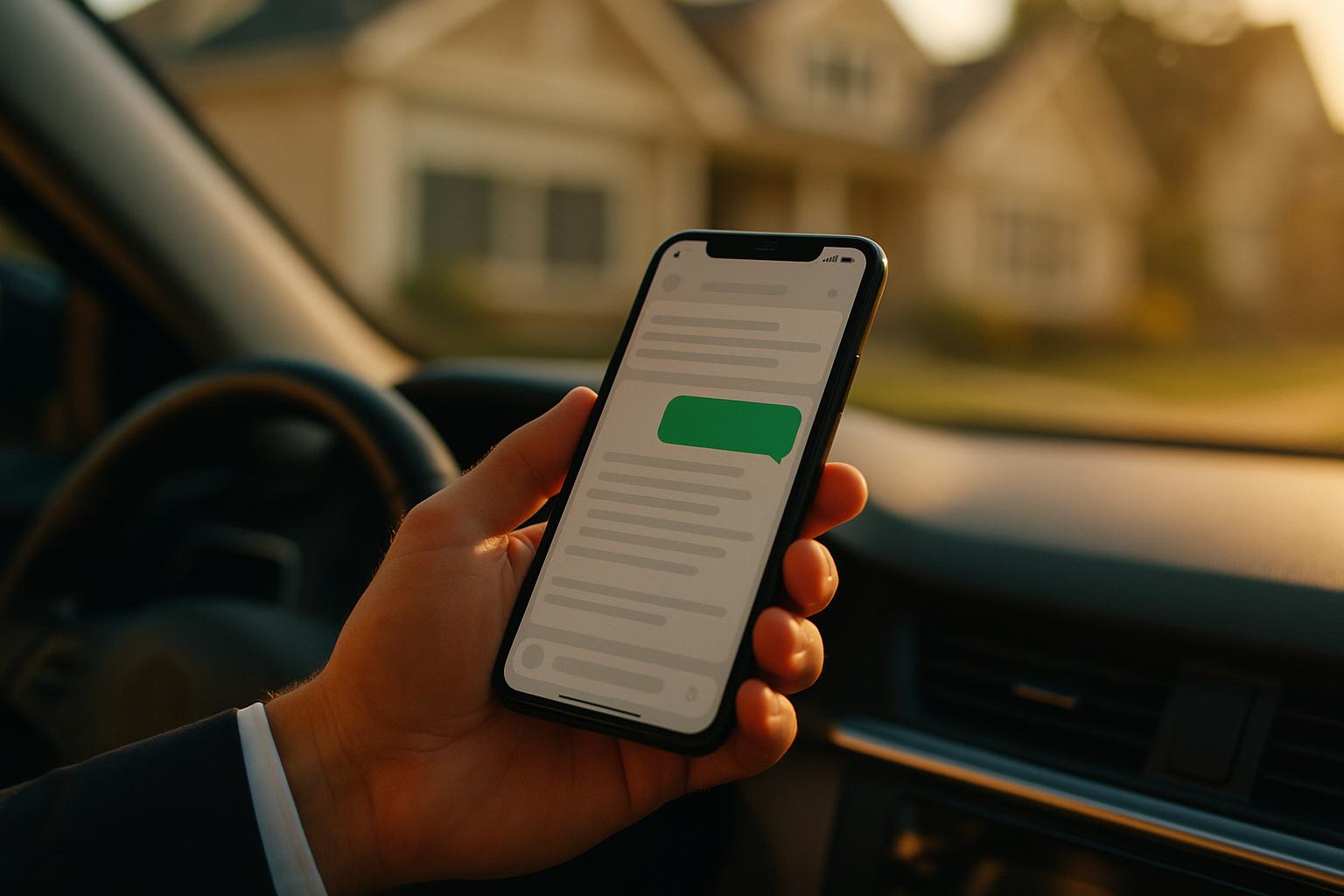
The reason this matters is that most agents pay for the first three categories and feel like AI is "working" without ever touching the fourth. Lead capture happens at the top of the funnel, before you do real work. Marketing content happens off to the side. Lead nurture happens in a separate dashboard you check twice a day. The personal-agent layer is the one that follows you around between showings, listening, drafting, and remembering. It is also the one most agents are underserving themselves on.
The Market in 2026, Honestly
Before you pick anything, it is worth knowing what the price ladder actually looks like for a working realtor.
| Tool | Audience | Approximate Price | What It Does |
|---|---|---|---|
| Rechat | Brokerages, full platform | Custom enterprise pricing | CRM, marketing suite, deal tracking, plus the new AI Memo conversation capture |
| Lofty, Follow Up Boss | Teams and individual agents | $79 to $400+ per month | CRM and transaction coordination, with AI lead nurture bolted on |
| Ylopo, Structurely | Lead nurture specialists | $295 to $1000+ per month | AI SMS and voice cadence on top of your existing CRM |
| Perspective AI, Crescendo | Lead capture | $50 to $200+ per month | Conversational lead-intake forms on your website |
| SmartZip, Top Producer | Predictive seller ID | $300 to $1000+ per month | Lists of likely-to-list homeowners in your farm |
| Listing Copy AI, similar | Marketing content | $20 to $99 per month | Real-estate-tuned listing description and social post generators |
| ChatGPT Plus, Claude Pro | Anyone | $20 per month | General-purpose chat, no real-estate context, no persistent memory |
| Gabbi.ai | Client relationship hub | Beta, free trial | Central client communication hub (invite-only as of mid-2026) |
| Self-hosted personal agent | Privacy-conscious individuals | ~$5 VPS + a few dollars in API usage | Personal agent on your messaging app, BYOK, persistent memory across clients |
Two patterns stand out. First, a complete solo-realtor AI stack in 2026 typically lands between $100 and $400 per month if you buy off-the-shelf, more if you also use a team-grade CRM with the AI add-ons turned on. Second, the products marketed under the loudest "AI for real estate" headlines target brokerages and large teams, not the working individual agent. A single-agent setup is often paying for capacity it does not need and capability it never uses.
What to Actually Look For
If you are evaluating any AI assistant for a real estate practice in 2026, the questions worth asking are the unglamorous ones.
Where does the client data live, and who can see it? Buyer and seller information lives under your fiduciary duty, your brokerage's data-handling policies, and sometimes state-level regulation. Model API providers all publish data-use terms, and most offer enterprise tiers that exclude your prompts from training. Whatever you pick, you need to be able to answer the data-handling question concretely when a careful client or your broker's compliance officer asks. "I am not sure" is not a good answer when you are holding the listing for someone's primary residence.
Does it remember anything between conversations? A lot of "AI for real estate" is a chat window with no memory. You re-paste the client context every time. For a personal agent that handles your day, persistent memory across sessions is the feature that turns it from a fancy autocomplete into something useful. Per-client context (price range, must-haves, deal-breakers, the school district that ruled out three listings) is where the compounding value lives. This is also where Rechat's AI Memo is a step in the right direction and where ChatGPT-style chat windows fall down.
Can you bring your own model and your own API keys? BYOK is the difference between paying $30 to $99 per month flat and paying for the actual tokens your usage consumes, plus the freedom to switch providers when one of them changes terms. For a one-agent practice the API costs are typically a few dollars a month. Our guide to the best model providers for a personal agent walks through what BYOK looks like in practice.
Where does it live during your day? A web dashboard is convenient but you do not open it between showings. Email is fine for end-of-day work but it is not where you actually talk. The agents who report the most value from AI in 2026 are the ones whose assistant is reachable from the messaging app already on their phone, usually Telegram or WhatsApp, sometimes Signal. The dashboard is not the product. The chat is.
Does it do anything outside marketing? The best return on time for a working realtor is rarely a faster listing description. It is the agent that captures your post-showing voice note, drafts the next nudge to a quiet buyer, schedules the quarterly check-in with past clients, and flags the lead that has gone cold. None of the lead-capture, lead-nurture, or marketing-content tools cover that surface end to end for an individual agent.
Where a Self-Hosted Personal Agent Fits
Hermes Agent is one option for the fourth category, the personal-agent piece. It is an MIT-licensed runtime you self-host or run on the managed Hermify hosting tier. You connect it to your own model provider with your own API key (OpenAI, Anthropic, OpenRouter, or others), and you talk to it through Telegram, WhatsApp, Signal, Slack, or email - whichever messaging app already lives on your phone. It keeps persistent memory across conversations, so when you say "follow up with the buyer we showed the Cedar Lane house to last Tuesday," it knows which buyer, which property, and which loose ends remain. The broader concept is covered in our post on persistent memory and skills in an AI assistant.
For a working realtor the practical shape looks like this:
- Post-showing capture. You finish a showing, walk to the car, send a 90-second voice note. The agent transcribes it, files feedback against that listing, drafts the recap email to the buyer, and saves the engagement notes to that client's memory.
- Lead follow-up that does not slip. A buyer has gone twelve days without a response to your last text. The agent surfaces it, drafts the next touch in your voice, you hit send.
- Per-client memory. Price range, must-haves, deal-breakers, family situation, the lender they were pre-approved with. Surfaced when you ask, not paid-for in a separate CRM seat.
- Cadence and reminders. Past-client quarterly check-ins, listing expiration follow-ups, contract milestones. The agent runs the calendar around your real schedule and pings you when one of them is about to slip.
- Deliverable work stays where it is. Listings, contracts, comps, the MLS - your existing tools own those. A personal agent is not a substitute for your CRM, your MLS, or your transaction-management software. It is the layer that wraps your day around them.

The cost profile is also different from the brokerage-grade platforms. A $5 VPS plus a few dollars a month in model API usage is a normal monthly bill for a single-agent setup. The trade-off is that you spend an evening with the docs to set it up, instead of clicking "Subscribe." For agents who do not want a third-party SaaS sitting between them and their client conversations, who change brokerages occasionally and do not want their AI history locked inside whichever platform their last broker chose, or who simply prefer to own the runtime, the trade-off is usually worth it. For agents who want zero setup, Hermify's hosted tier gives you the same agent on managed infrastructure starting at $19 a month.
What This Does Not Do
A personal AI agent does not show the house, does not negotiate the deal, and does not replace the trust your sphere extends to you. The 5WPR and Haute Residence research published in April 2026 also pointed out that real estate ranks last among major industries for AI search visibility, which means the discovery problem (getting found in the first place) is not solved by any of the tools above. Use any agent the same way you would use a competent transaction coordinator: useful, fast, and double-checked.
It also does not replace the work that wins listings and keeps clients for life. The five touches it takes to convert a past-client referral, the 30-minute call with a worried seller two days before closing, the open house where you meet the buyer who eventually becomes your top advocate - none of that is automatable in 2026 and probably will not be for a long time. What an AI assistant does is buy you the time to do those things, by absorbing the surrounding administrative weight that makes a solo real-estate practice exhausting.
A Workable Stack for an Individual Realtor
You do not have to pick one product and call it your "AI strategy." A practical 2026 stack for a working solo or small-team realtor often looks like this:
- A model provider with BYOK. A paid OpenAI, Anthropic, or OpenRouter account so the rest of your stack can call a real model on your terms, not a SaaS reseller's.
- A personal agent layer that lives on your phone, captures your day, drafts your follow-ups, and remembers your clients across sessions. This is where a self-hosted runtime like Hermes Agent (self-hosted or on Hermify) fits.
- A CRM you already trust. Lofty, Follow Up Boss, Wise Agent, or whatever your brokerage gives you. Keep it. Do not move your contact records into the AI tool itself.
- Optional: a lead-capture layer if you run paid traffic or buy Zillow leads at scale. Perspective AI or the conversational capture inside your CRM. Most solo agents do not need this.
- Optional: a marketing-content layer for listing descriptions, social, and market reports. ChatGPT, Claude, or a real-estate-tuned tool. $20 a month is fine here; you do not need the $99 tier.
You do not need to decide everything at once. Start with the layer that costs you the most time. For most individual realtors that is the personal-agent layer, because the lead-capture market is well-served, the marketing-content market is well-served, and the layer that captures your day and remembers your clients between Monday and Thursday is the one that has been ignored.
Get started with Hermify if a personal agent on your phone is the layer you want to try first. You keep your data, you keep your model choice, and you keep the agent that remembers your buyers, your listings, and your past clients across the year.
Sources
- AI adoption reaches 82% among real estate agents, RPR reports - HousingWire
- 82% of Real Estate Agents Use AI: The Real Gap Is Confidence - RPR 2026 AI Adoption Survey
- So Pretty Much Everyone In Real Estate Is Using AI Now - Inman
- Top AI Survey of Real Estate Leaders - WAV Group Consulting
- The 10 Best AI Tools For Real Estate in 2026 - The Close
- AI for Real Estate Agents: 35+ Tools to Use in 2026 - Ascendix
- Rechat Launches AI Memo to Capture Agent Conversations in Real Time - RISMedia
- Gabbi.ai - super intelligent Real Estate AI assistant
- Best AI Tools for Real Estate Agents in 2026: A Ranked Comparison - Perspective AI
Run Your Own Hermes Agent
Bring your API key, connect Telegram, and get a self-improving AI agent live in 60 seconds.
Get Started